

The problem started last spring, right after I dropped a new CPU into my mid-tower. The chip ran fine for about ten minutes. Then the fans spun up like a jet spooling for takeoff, and the temperatures kept climbing. I watched the numbers on my monitor creep toward the red while my game stuttered.
A guy at work who builds systems on the side heard me complaining and said, 'Stop overthinking it. Look at the Thermalright Peerless Assassin 120 SE.' I'd heard the name in passing, but I hadn't paid attention. I'd been building PCs for twenty years, and I had a bad habit of assuming that budget parts and quiet operation couldn't go together.
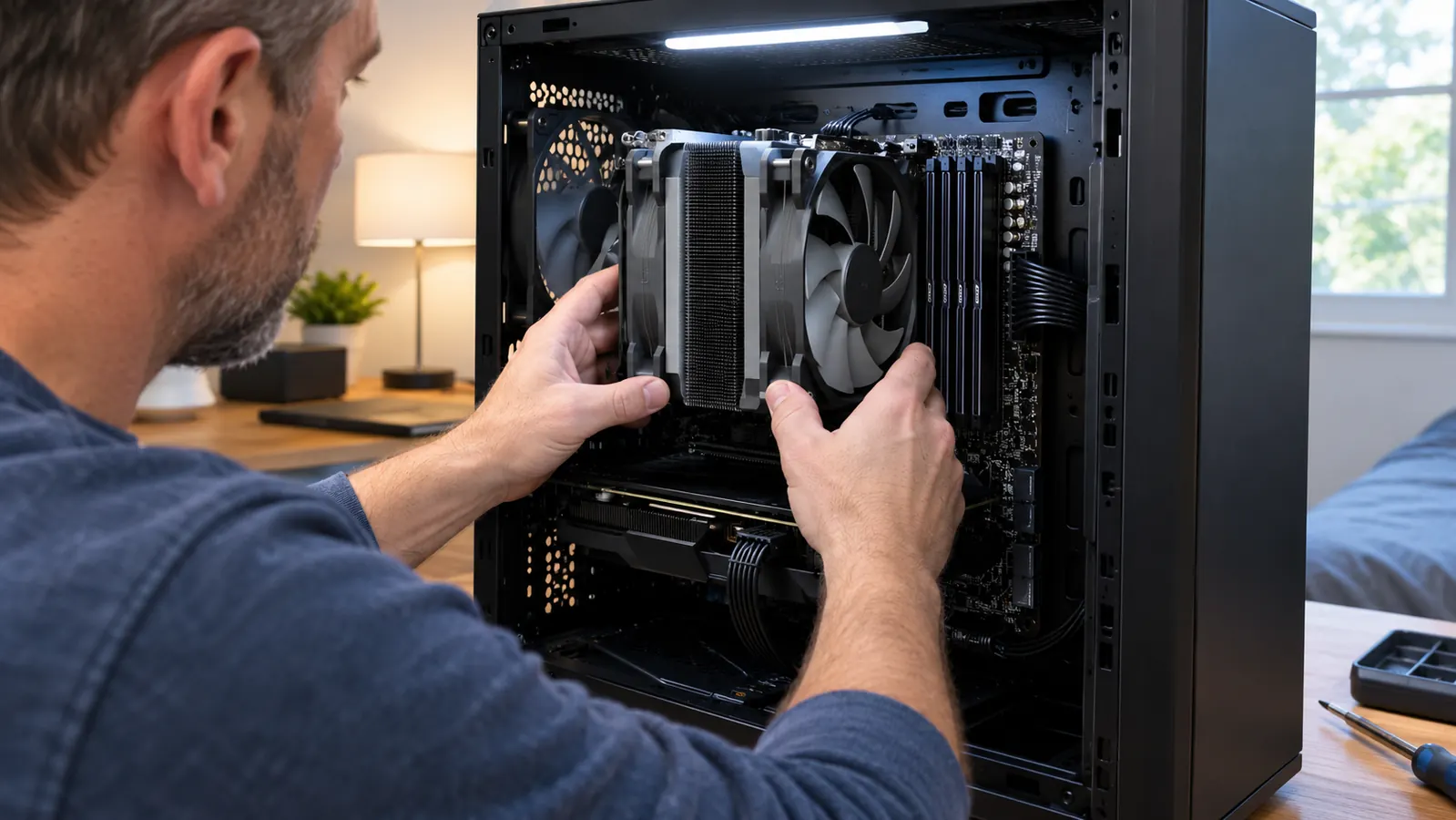
The old cooler was the real problem. It had been fine for the previous chip, but I'd paired a hot-running processor with a cooler that was undersized for the job. The thermal paste was fresh, the mounting pressure was right, and it still wasn't enough. For a week, I lived with the noise.
My desk is a corner setup in a spare bedroom that doubles as my home office, so every gaming session sounded like I was running a small workshop in the house. My wife started closing the door when she walked past. My son Owen, who plays on the same rig on weekends, asked if the PC was supposed to sound like that. It was the kind of noise that made me want to stop playing, which defeated the whole point of a gaming PC.
The obvious answer was a liquid cooler. Every build video I watched seemed to have one, and the temperature numbers looked great. But I kept thinking about the downsides: a pump that can fail, coolant that needs attention, radiator fans and tubing that make cable management harder, and a price that made me wince.
So I looked at the Thermalright properly. A large air cooler with six heat pipes and two 120mm fans, priced like a midrange part, was matching liquid coolers in most real-world tests. It didn't have the flash, and it didn't need it. It just had to move heat from the CPU to the air, and the reviews said it did that very well.
The first stress test after the swap topped out more than 20 degrees cooler than the old cooler under the same load. I sat there waiting for the catch, and it never came.
Tired of fan noise and high temps? This is the cooler that fixed it.
The Thermalright Peerless Assassin 120 SE is the budget air cooler I recommend to anyone who wants quiet, reliable cooling without a liquid loop. Check today's price on Amazon and see if it fits your build.
Amazon Check Today's Price on Amazon →Installation took about forty minutes, including reading the manual twice. The mounting hardware covers both AMD and Intel sockets, so there was no guessing whether it would fit my board. The front fan sits high enough to clear my RAM with room to spare, and the whole cooler fits in my mid-tower without brushing the side panel.
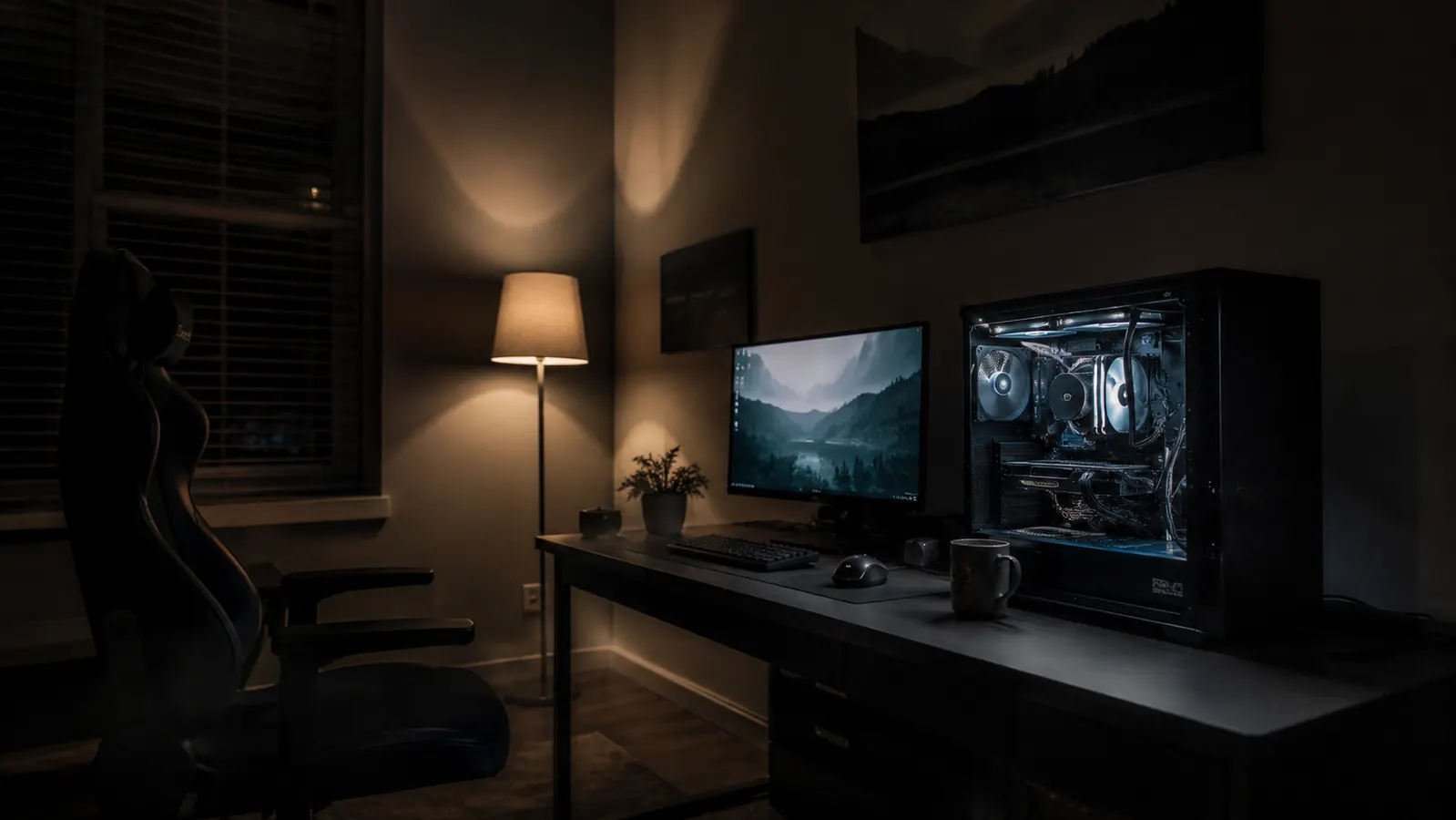
The first boot was quiet. Idle temps dropped into the low thirties, and under a full gaming load the CPU settled in the sixties, which I honestly didn't expect from an air cooler. The fans do ramp up when the chip is working hard, but it's a low whoosh, not the high whine I'd been listening to for a week. The two 120mm fans can spin up to 1550 RPM when they need to, but at normal gaming loads they stay well below that, and the cooler does the work with airflow instead of raw noise. My corner desk sits about two feet from my head, and during a long evening session the loudest thing in the room is usually the click of the keyboard.
The practical difference showed up in the games. No more thermal throttling, no more stutter when a scene got busy, no more glancing at the temperature readout mid-fight. Owen noticed it too. He said the PC feels faster, which is the best kind of compliment, because it isn't faster. It just isn't holding itself back anymore.
There are trade-offs, and I'd be lying if I said there weren't. This cooler is big. You need a case with enough clearance for its height, and you should double-check RAM height if your memory has tall heat spreaders. It is not the prettiest thing in the world. But it has no pump to fail, no coolant to leak, and nothing to maintain. It also covers nearly every modern socket, so if you upgrade your motherboard later, the same cooler usually moves over with you. Four months in, it still runs exactly like it did on day one.
If I had to do it over, I would have bought this cooler before I upgraded the CPU, not after. It would have saved me a week of loud fans and a very annoyed household. The Thermalright is the rare part that does exactly what the box says it will do, and nothing more.
What I'd Tell You If We Were Sitting at My Kitchen Table
If you're building on a budget, a good air cooler is the honest answer. The Thermalright Peerless Assassin 120 SE gets you within a few degrees of most liquid coolers at a fraction of the cost, with fewer parts that can break. I tell my friends the same thing I'd tell you: buy the cooling you actually need, make sure it fits your case, and spend the money you save on a better GPU or more RAM. That saved money is the difference between a midrange GPU and a top-tier one in a lot of builds, and I'd rather have the GPU every time. Most gaming builds do not need liquid cooling. They need enough cooling, and this is enough.
The quietest upgrade I made this year
With more than 3,300 reviews and a 4.7-star average on Amazon, the Thermalright Peerless Assassin 120 SE is the budget air cooler I keep recommending. Check today's price and see if it fits your build.
Amazon Check Today's Price on Amazon →