
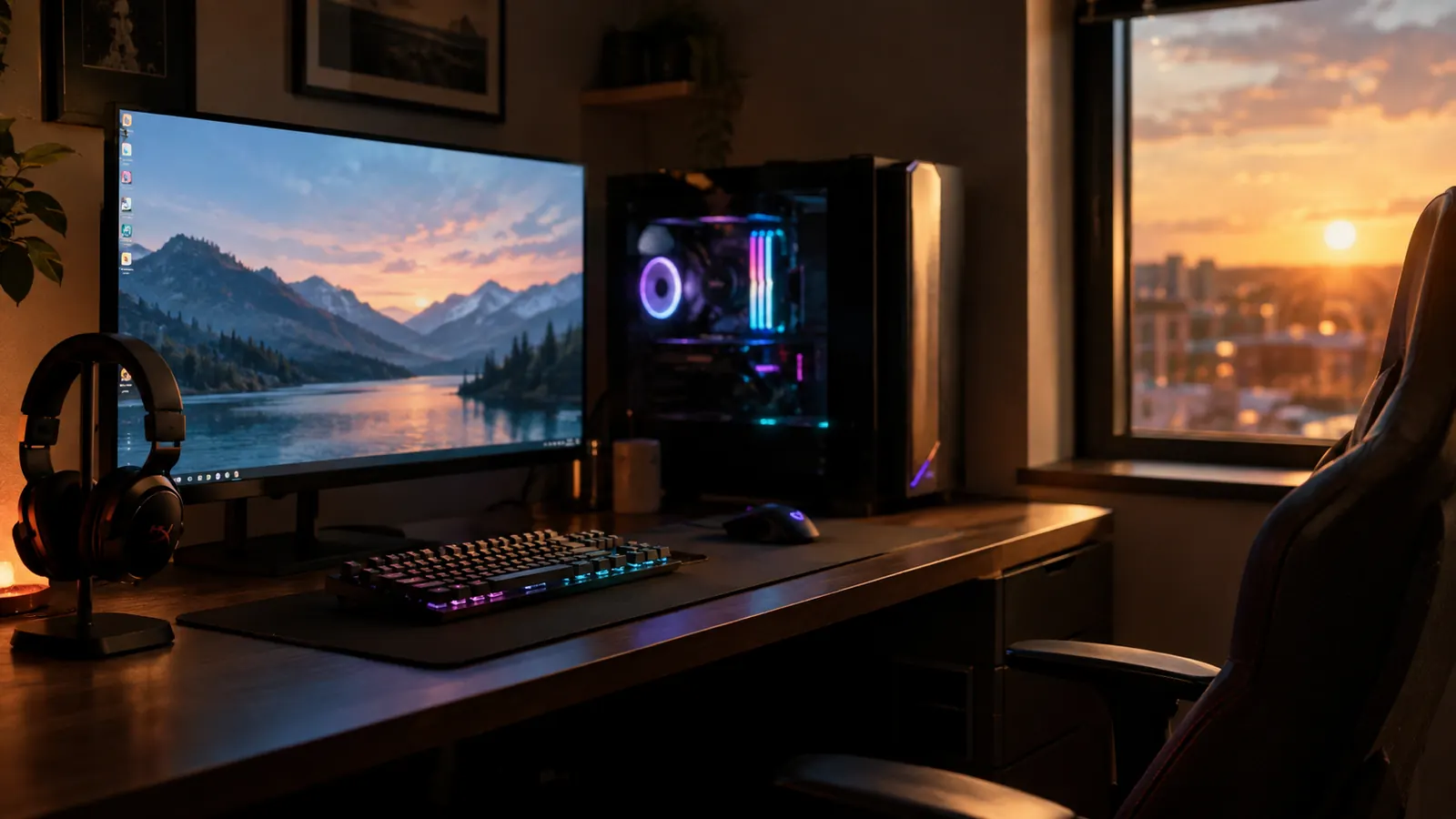
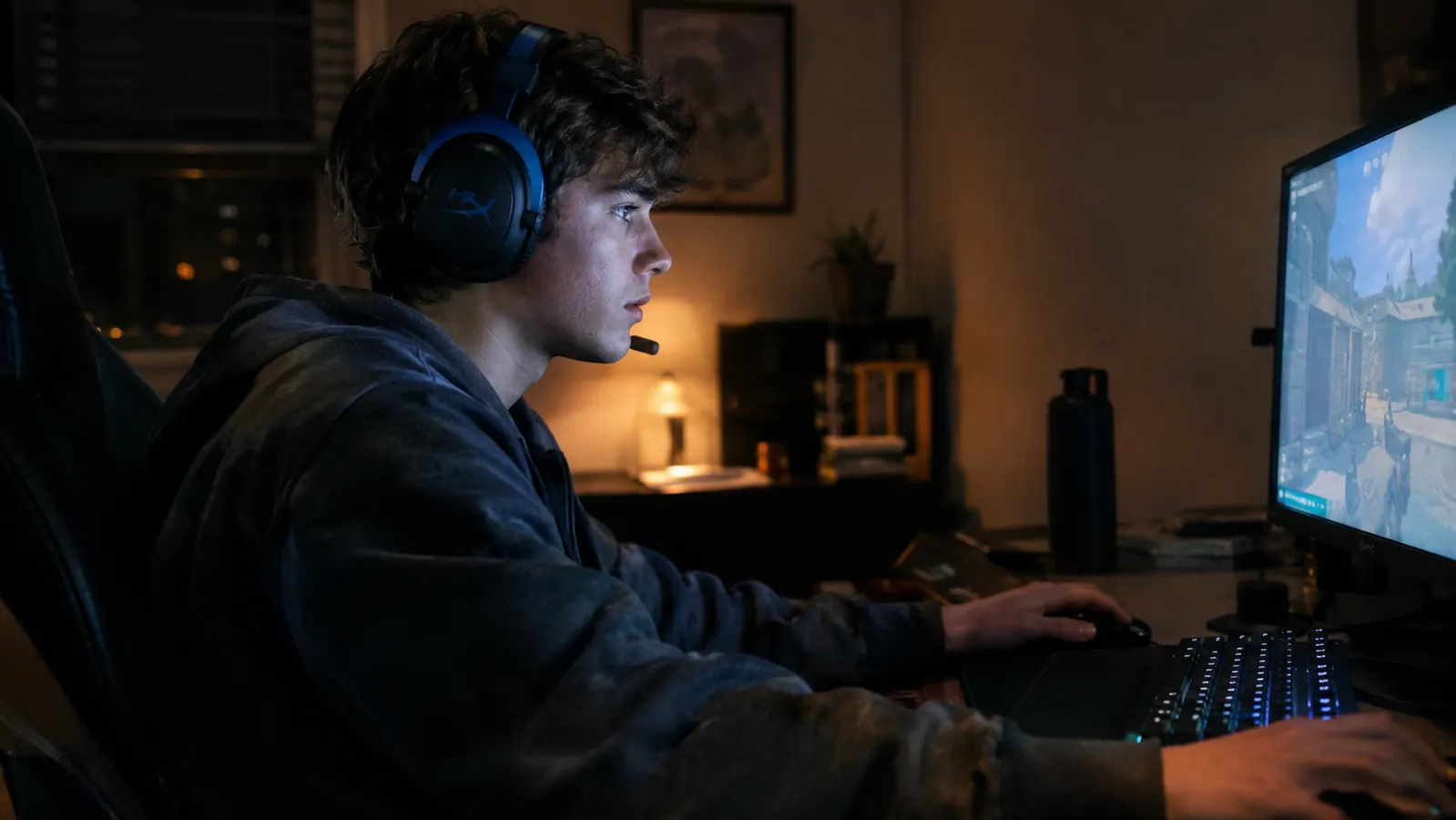
I built my first PC about twenty years ago, and I have been the unofficial tech support for my neighborhood ever since. So when my son Owen started playing competitive shooters on my main rig, the headset question became a household issue. He kept borrowing mine, I kept needing it back, and neither of us wanted to admit that the cheap pair from a big box store was driving us both crazy. I spent a few evenings reading reviews, and the HyperX Cloud II kept showing up in places where people talk about headsets after a year of use, not just after a week. So I bought one for Owen to test, figuring he would either break it or confirm the reputation. Six months later, it is still on his head most weekends, and I have a long list of opinions.
This is not a spec sheet review. I am not going to pretend I can hear the difference between two audio codecs in a blind test, because I cannot. What I can tell you is what this headset sounds like at midnight when the house is quiet, what it feels like after three hours of ranked matches, and whether it survives being dropped on a desk by a fifteen-year-old. That last one matters more than any frequency response graph.
The Quick Verdict
The HyperX Cloud II is the headset I recommend first to anyone building a budget-conscious gaming PC. It sounds better than its price suggests, it is genuinely comfortable for long sessions, and it has survived six months of daily abuse in my house.
Amazon Check Today's Price →If you are shopping for a first wired headset, start here.
The Cloud II is the pick I default to when friends ask what to buy. Check the current price on Amazon, then read on for the long-term details that the spec sheet will not tell you.
Amazon Check Today's Price on Amazon →How I've Used It
Here is the setup, so you know exactly what this review is based on.
The Cloud II lives on the corner desk in my spare bedroom, which doubles as my home office. Most weeknights I get an hour or two in after dinner, and on Saturdays Owen and I take turns on the same PC. That means the headset gets unplugged, handed over, and re-plugged constantly. It has been knocked off the desk at least four times that I know of. It has been yanked out of the USB sound card by someone who forgot the cable was attached. It has also been worn for a full afternoon of gaming during a summer thunderstorm, when the power flickered and the wireless alternatives in the house were useless.
I mention the abuse first because it is the real test. A headset can sound great in a quiet room and fall apart in an actual house. The Cloud II is built around an aluminum frame, which I will get to below, and after six months the hinges are still tight and the padding still feels like new. That is more than I can say for the two wireless headsets I owned before this one.
For sound, I mostly play shooters and the occasional co-op game with Owen. In Call of Duty I can hear footsteps directionally well enough to know which staircase someone is coming up, which is the level of detail I actually notice. Music sounds fine for a gaming headset, not amazing, but fine. The 7.1 virtual surround setting is a toggle I mostly leave off, because I think it smears the sound a little. More on that below.
One more detail about how I use it: the Cloud II stays plugged into the front of my PC case, which means the cable runs across the desk when I sit down. I have thought about routing it under the desk a dozen times, and I still have not done it. If perfect cable management is your goal, plan for the cable. It is thick enough to notice, and it is the one part of this headset that will not hide.
Sound Quality: What I Actually Hear
The HyperX Cloud II uses 53mm drivers, and I will tell you the honest version of what that means. Bass has weight without turning everything into mud. Explosions rumble, but I can still hear the quieter sounds layered on top, like a reload or footsteps on gravel. Mids are where this headset does its best work. Voices in games and podcasts come through clear, which matters because I spend half my gaming time listening to my son explain a strategy while we play.
Treble is the weakest part. Cymbals and high hats in music can sound a little sharp, and in games a distant sound like a drone overhead can occasionally dominate. It is not bad enough to bother me during a session, and I only really noticed it when I compared the Cloud II directly against a friend's much more expensive headset. At its price, the balance is genuinely good.
Soundstage is a word audiophiles use, so I will translate it. When I play a co-op game with Owen, I can tell whether a sound is coming from the left, the right, or somewhere behind. That is enough for me to react without seeing the screen, and it is the practical difference that matters in a shooter. The Cloud II is not the widest sounding headset I have tried, but it is accurate where it counts.
Comfort When You Forget You Are Wearing It
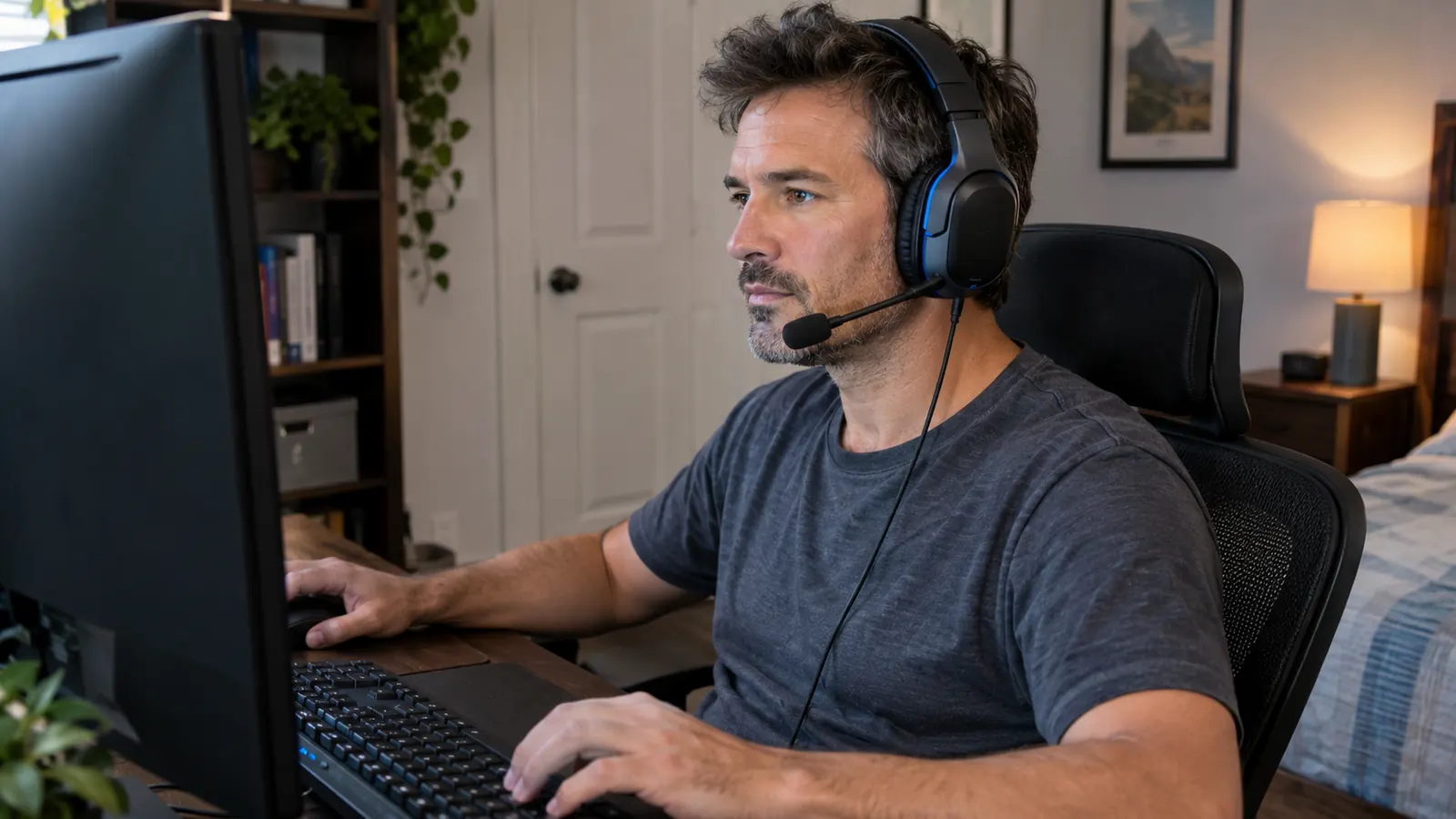
The ear pads are memory foam covered in leatherette, and they are the reason I keep reaching for the Cloud II instead of the newer headsets in the house. I wear glasses while I work, and most over-ear headsets press the arms of my glasses into my head within an hour. The Cloud II does not. The clamp force is firm enough that the headset stays put when I lean forward to grab a drink, but loose enough that I have worn it for four-hour sessions without needing a break.
The leatherette does make my ears warm in summer. That is the trade-off for the plush feel. If you game in a room without air conditioning, you will notice. Owen runs hot anyway, and he still chooses this headset over the alternatives, so it cannot be that bad.
The headband padding is the quiet hero. Most headsets put a thin strip of foam under the band, and after a few hours you feel it as a hot spot on top of your head. The Cloud II has a wide padded band that spreads the weight evenly, and I have never once felt that pressure point, even on the longest sessions. Owen wears a size larger hat than I do, and the adjustment range covers both of us without any guesswork.
Build Quality: The Aluminum Frame Argument
The frame is aluminum, and you can feel it when you pick the headset up. It is not creaky plastic. The earcups attach to the frame with a solid click, and the height adjustment is a metal slider that has not loosened after months of being adjusted by two different heads. This is the part that usually dies first on cheap headsets, and it is the part that still feels brand new here.
The cable is braided and thick, which is a good thing for durability and a mild annoyance for cable management. It is also permanently attached to the left earcup, so when the cable eventually wears out, you cannot just swap it. That is my biggest long-term worry with this headset. The detachable mic is a better design choice, because that is the part that usually breaks, and you can replace it without replacing the whole headset.
The Mic, the USB Dongle, and the 7.1 Question
The microphone is detachable, which I love because it means I can wear the headset on work calls and look normal. When my webcam mic died, I used the Cloud II for two weeks of meetings and nobody complained. The voice quality is clear, with the usual headset limitations. It picks up some background noise, but it is not the tinny, robotic sound you get from cheaper mics. There is a noise-cancelling mic on the end of the boom, and it does a reasonable job.
The included USB dongle adds 7.1 virtual surround and a few controls. I will be honest: I mostly use the 3.5mm cable straight into my PC, because the onboard sound on my motherboard is good and I do not need the extra software. The 7.1 mode is fine for games that support it, but it makes music sound hollow, so I leave it off. If you are buying this headset specifically for 7.1, set your expectations. It is a fun extra, not a reason to buy.
One small thing about the USB dongle: it has a built-in sound card and an inline mute button, and the mute works even when I use the 3.5mm cable, which I did not expect. The dongle also adds extra volume headroom, which helps if your motherboard has a weak headphone amp. It is a nice touch, and it is one of those details that makes the Cloud II feel more expensive than it is.
How It Holds Up After Six Months
After six months with the HyperX Cloud II, the memory foam still springs back, the leatherette has no cracks or peeling, and the aluminum frame has no wobble. The only visible wear is on the cable where it rubs against the desk edge, and even that is just a slightly rough patch, not exposed wire. For context, the two wireless headsets I owned before this both developed cracks in the plastic headband within a year.
The long-term question is the cable. It is not detachable, and braided cables do eventually fail at the strain point. I would guess this headset has another year or two of daily use in it before that becomes a real concern, and at that point the whole unit is the replacement. That is the honest trade-off of buying a wired headset at this price. You accept that the cable is the weakest link, and in exchange you get a headset that does not need charging and never has a battery swell.
Maintenance has been simple. I wipe the leatherette pads down with a damp cloth every couple of weeks, because they do pick up skin oils and the pads are the first thing that starts to look old. The detachable mic snaps out for cleaning and snaps back in with a firm click. I have not had to replace anything yet, and I do not expect to for a while.
What I Liked
- Memory foam ear pads stay comfortable through four-hour sessions, even with glasses
- Aluminum frame has survived six months of daily use and multiple drops
- Detachable mic works well for gaming and for work calls
- Clear, well-balanced sound for shooters and for music
- Wired connection means no charging, no pairing, no battery to degrade
Where It Falls Short
- Cable is permanently attached, so when it wears out the whole headset goes
- Leatherette pads get warm in summer
- 7.1 surround mode smears music and is easy to ignore
- Treble can sound sharp on some music
Six months of daily use, a few drops off the desk, and one yank out of the USB dongle by a teenager. The aluminum frame still has zero wobble.
Who This Is For
If you are building your first gaming PC, or upgrading from a headset that came free with a phone, the Cloud II is the safest recommendation I can make. It works with everything you already own. The 3.5mm cable plugs into your PC, your console controller, even your phone. It does not need software to sound good, which is huge if you hate installing drivers and RGB apps just to use a peripheral. I have recommended it to three friends this year. One uses it on a PS5 through the controller, one uses it on a laptop for work and games, and one is a teenager who has, as far as I can tell, never once put it down gently. All three are still using it months later.
It is also for people who play in a household where more than one person uses the gear. The build quality and the replaceable mic make it a better shared headset than most. And if you are the person who is tired of charging wireless headsets, this is a small rebellion you will enjoy.
Who Should Skip It
If you need a wireless headset, this is not it. I went wireless for two years and I understand the appeal. No cable to snag on your chair arm, no wire to manage. The Cloud II will not give you that. It is also not the right pick if you play on a couch with the console across the room, because the cable will limit how far you can sit from the screen.
And if you already own a higher-end headset and you are happy with it, this is not an upgrade. It is a sidegrade at best. The Cloud II is a great value headset, not a luxury one. If you have been gaming on a pricier headset for years, you will notice the difference in detail and soundstage, and you will probably want to stay where you are.
Six months in, this is still my default recommendation.
The HyperX Cloud II is the wired headset I tell friends to buy first, and I have not had anyone come back disappointed. Check today's price on Amazon to see where it lands in your budget.
Amazon Check Today's Price on Amazon →