
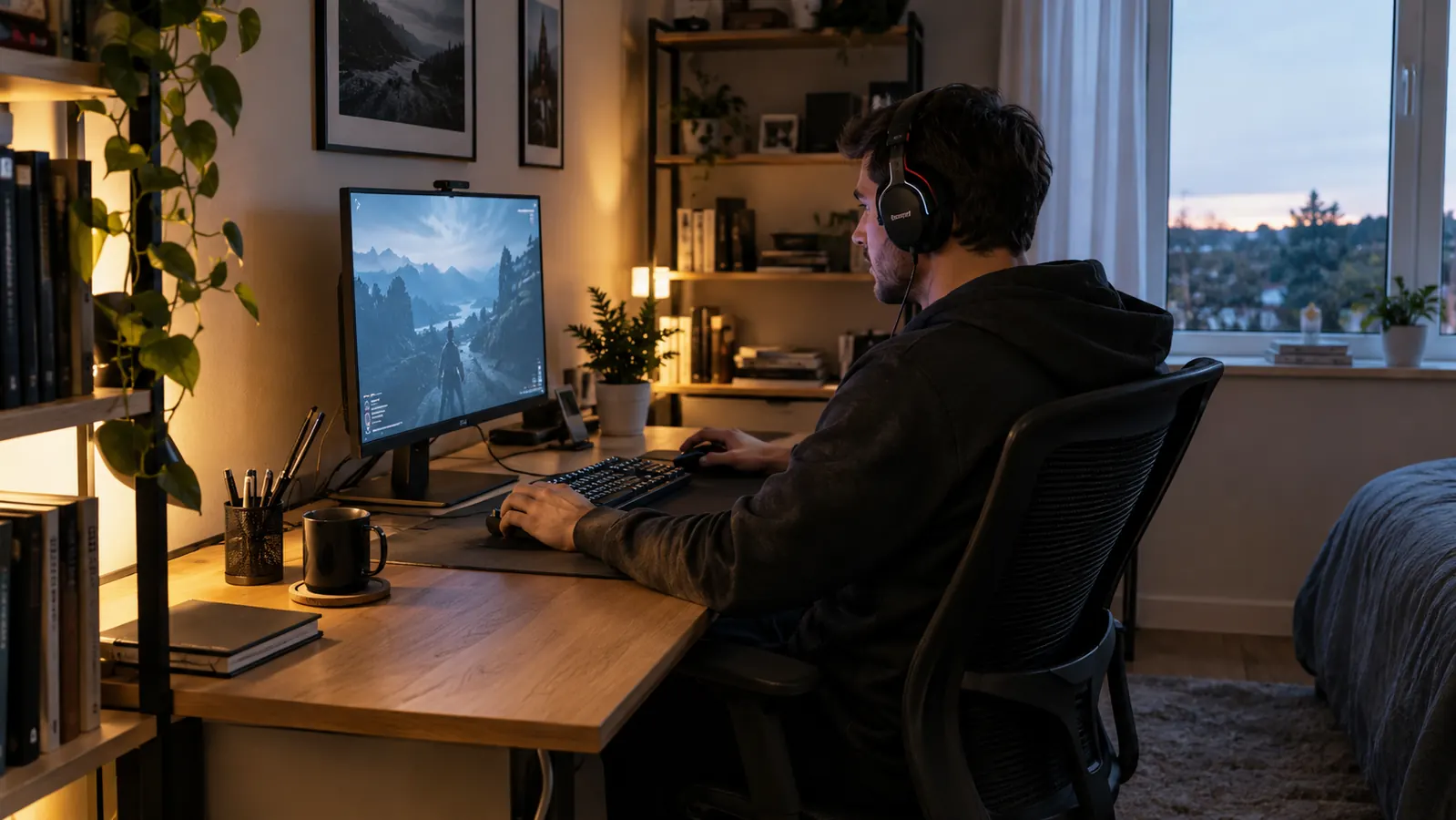
The loudest part of my PC build was never the GPU. It was me, talking over the noise. I'm Mark, I've been building and upgrading gaming PCs for about twenty years, and my main rig is a mid-tower I put together myself. It sits on a corner desk in a spare bedroom that doubles as my home office, so noise and heat matter to me more than they used to. For months, the sound coming out of that machine was the one thing I could not fix with a part swap. Then I tried a wired gaming headset, the HyperX Cloud II, and it changed how I hear every game I play.
I tried the obvious things first. A better CPU cooler. Quieter case fans. I even moved the tower to the far end of the desk so it sat farther from my chair. The temperatures improved and the cable mess got a little better, but the problem was still there: every time I loaded into a game, the fans spun up and I found myself turning the volume up to hear anything over the hum. My son Owen, who is 15 and plays on the same PC on weekends, started wearing earplugs during long sessions. That was the moment I stopped looking at the tower and started looking at what I was listening through.
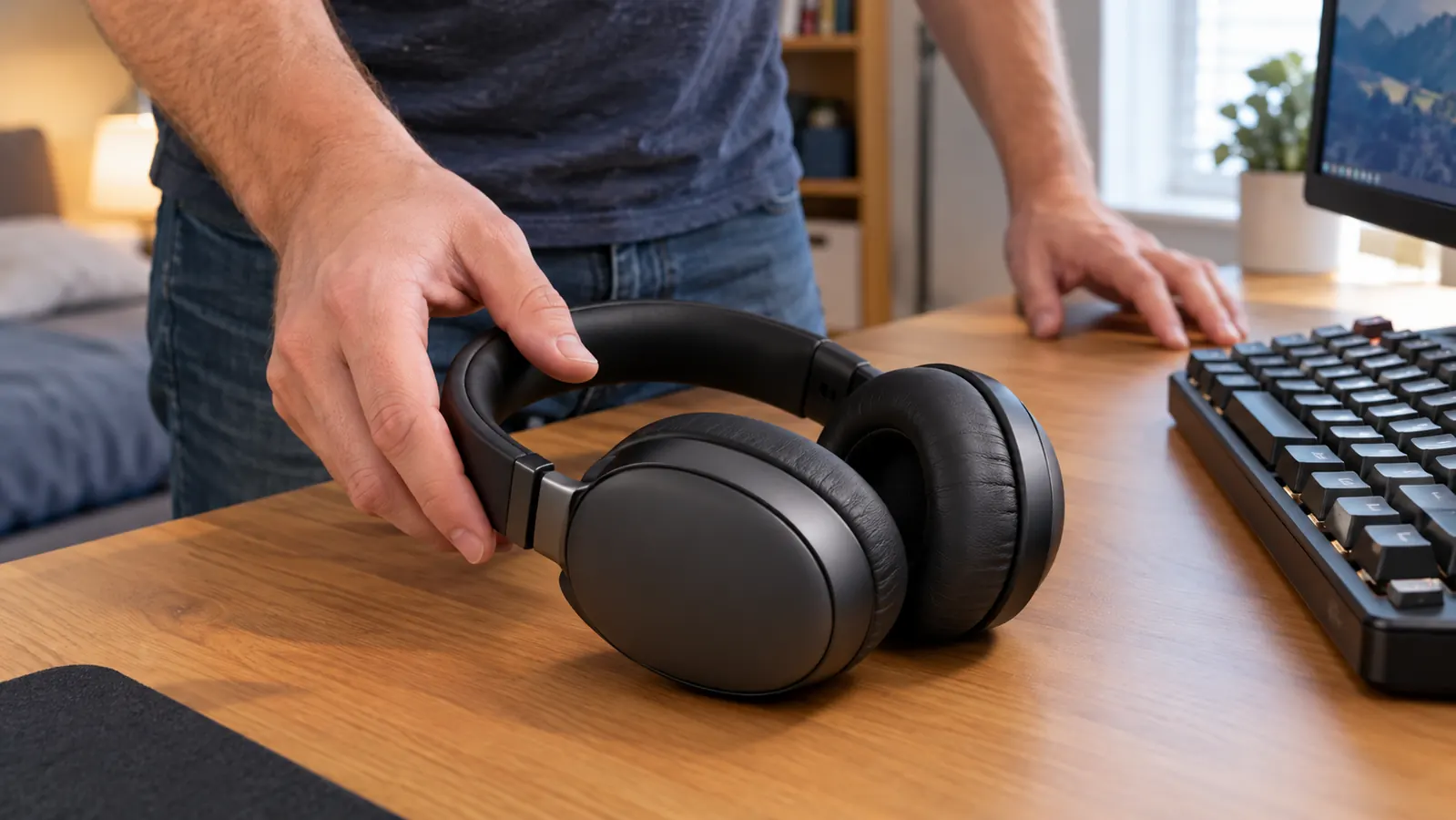
Here is the part of the story where I admit something embarrassing. I had a decent speaker setup and a cheap pair of earbuds, and I had convinced myself that audio was a luxury I could upgrade later. The HyperX Cloud II changed my mind in about one evening. It did it by being a wired gaming headset that simply worked. No drivers to fight with, no battery to charge, no Bluetooth pairing dance before I could join a match. You plug it in and it sounds right.
I want to be clear about what this article is. It is not a spec sheet and it is not a benchmark table. It is the story of how a wired headset fixed the most annoying part of my build, told the way I would tell it to a neighbor who asked what I did about the noise.
The short version is this: if your game audio is the weakest part of your build, you already have the fix in front of you. You do not need a new GPU or another fan. You need to hear the game properly, and you need to stop hearing the PC while you do it.
The HyperX Cloud II cut the fan noise enough that I stopped shouting down the hall between rounds.
If your game audio is the weakest part of your build, start here
The HyperX Cloud II is the headset I reach for every evening. It is comfortable for long sessions, the sound is clear enough to hear footsteps, and the closed ear cups do a solid job of blocking the hum of a mid-tower under load. Check today's price on Amazon before you spend another night turning the volume up.
Amazon Check Today's Price on Amazon →The first thing I noticed was how quiet my room got. The Cloud II has closed ear cups with memory foam pads, and they seal around your ears in a way that cuts down on the fan noise from the tower sitting two feet away. I did not expect that. I expected good game audio, because that is what everyone talks about. What I did not expect was the silence in between. Suddenly I could hear the game at a normal volume without cranking it to drown out the PC. My wife noticed the quiet too.
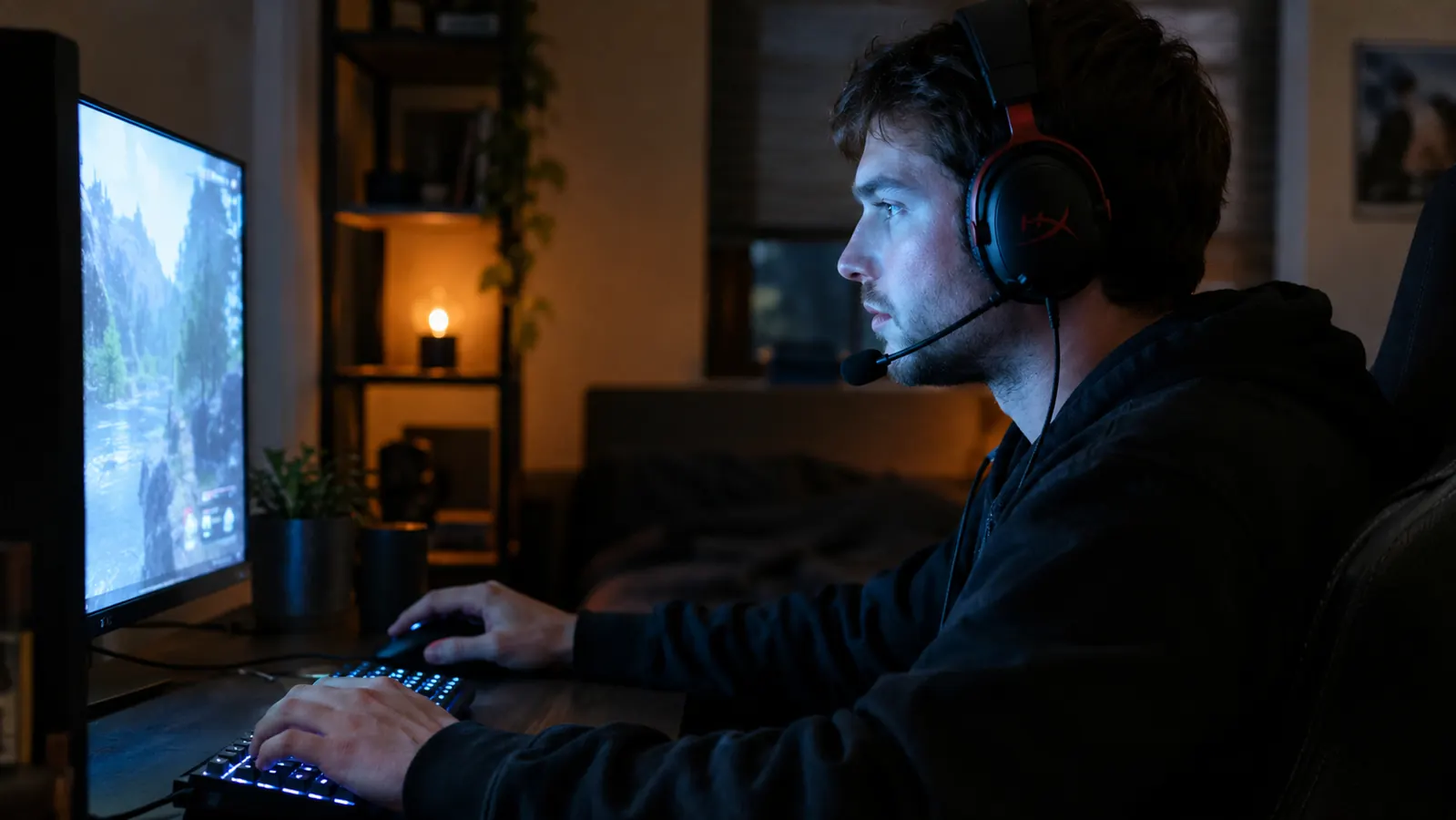
The aluminum frame is the other detail that won me over. I have broken more plastic headbands than I care to count, usually by leaning back and forgetting the cable was plugged in. The Cloud II has a sturdy metal frame that flexes instead of snapping, and after several months of daily use it still holds its shape. That matters when a headset is shared between a 44-year-old with a big head and a 15-year-old who yanks it off when he loses a match.
I will also tell you what I do not love, because no honest review skips this part. The 7.1 virtual surround is a feature I mostly leave off. The stereo sound is so well tuned on its own that the virtual surround just spreads things out without adding much detail. The inline control box is a little bulky and sits mid-cable, which took me a few days to get used to. And the microphone, while perfectly clear for Discord and in-game chat, is not going to replace a dedicated mic for streaming. For my use, none of those are dealbreakers. They are trade-offs.
The other thing worth saying is about the cable. A wired headset means one cable running from your head to the PC, and if you are not careful, it becomes part of the mess you already have. I clipped mine along the back edge of the desk and it disappeared. What I got in exchange is a connection that never drops, zero latency, and no moment in a ranked match where I have to wonder whether the audio is lagging behind the screen. For a headset that sits on one desk and never moves, wired just makes sense.
There is one more thing I did not expect, and it has nothing to do with audio. Because the Cloud II is wired, my son and I stopped fighting over chargers and batteries. The headset lives on its hook beside the monitor, always ready, always charged. When Owen sits down for a weekend session, he puts it on and it works. That is the kind of reliability I care about more than any feature list.
What I'd Tell You If We Were Sitting at My Kitchen Table
If you came over and asked me whether a wired gaming headset is worth it, I would say this. If your PC is in one room and you do not need to wander away from the desk with audio still in your ears, wired is still the better deal. No charging routine, no dongle to lose, no connection to troubleshoot. The HyperX Cloud II is the headset I would recommend to someone who wants to fix the audio side of their build without spending a fortune or fighting with software. It is comfortable, it is built to last, and it made my room quieter the same night I plugged it in.
My advice: fix the audio side of your build before you touch another fan
The HyperX Cloud II is comfortable, built from aluminum, and wired so it never drops. It fixed the noise problem in my room and it might fix yours. Check today's price on Amazon and see for yourself.
Amazon Check Today's Price on Amazon →