

Every few months, someone in my Discord asks the same question: should I finally go wireless? I get the appeal. No cord snaking across the desk, no catching the cable when you lean back, no routing it around the keyboard. But after twenty years of building and upgrading gaming PCs, I keep landing on the same answer for desktop play: wired. The HyperX Cloud II is the headset on my desk right now, and it is the one I reach for every evening, not because it's the newest thing, but because it never gets in the way.
Here are the ten reasons a wired gaming headset beats wireless on PC, in the order they matter to me. This isn't benchmark worship. It's what I notice during a normal week of evening sessions and weekend matches with my son Owen, who plays on the same machine. If you're sitting at a desk, the cable is not a sacrifice. It's a trade that keeps paying off. None of this is marketing copy. It is what I have noticed from using this headset nearly every day.
Stop charging. Start playing.
The HyperX Cloud II is my daily driver, and it holds a 4.5-star average across more than 69,000 ratings. If you're tired of battery anxiety and connection drops, the current price on Amazon makes this an easy call.
Amazon Check Today's Price on Amazon →Zero battery anxiety, ever
A wireless headset is only as good as its charge. My son's old wireless set died in the middle of a ranked match while the software insisted it still had 40 percent left. That 40 percent reading was not a typo. The headset was dead either way. The HyperX Cloud II has no battery, no charging cradle, no low-power warning. You put it on, it works, and it keeps working for as long as you can stay awake. That sounds like a small thing until it happens to you mid-round.
Amazon Check the HyperX Cloud II's current price on Amazon →
No connection drops in the middle of a round
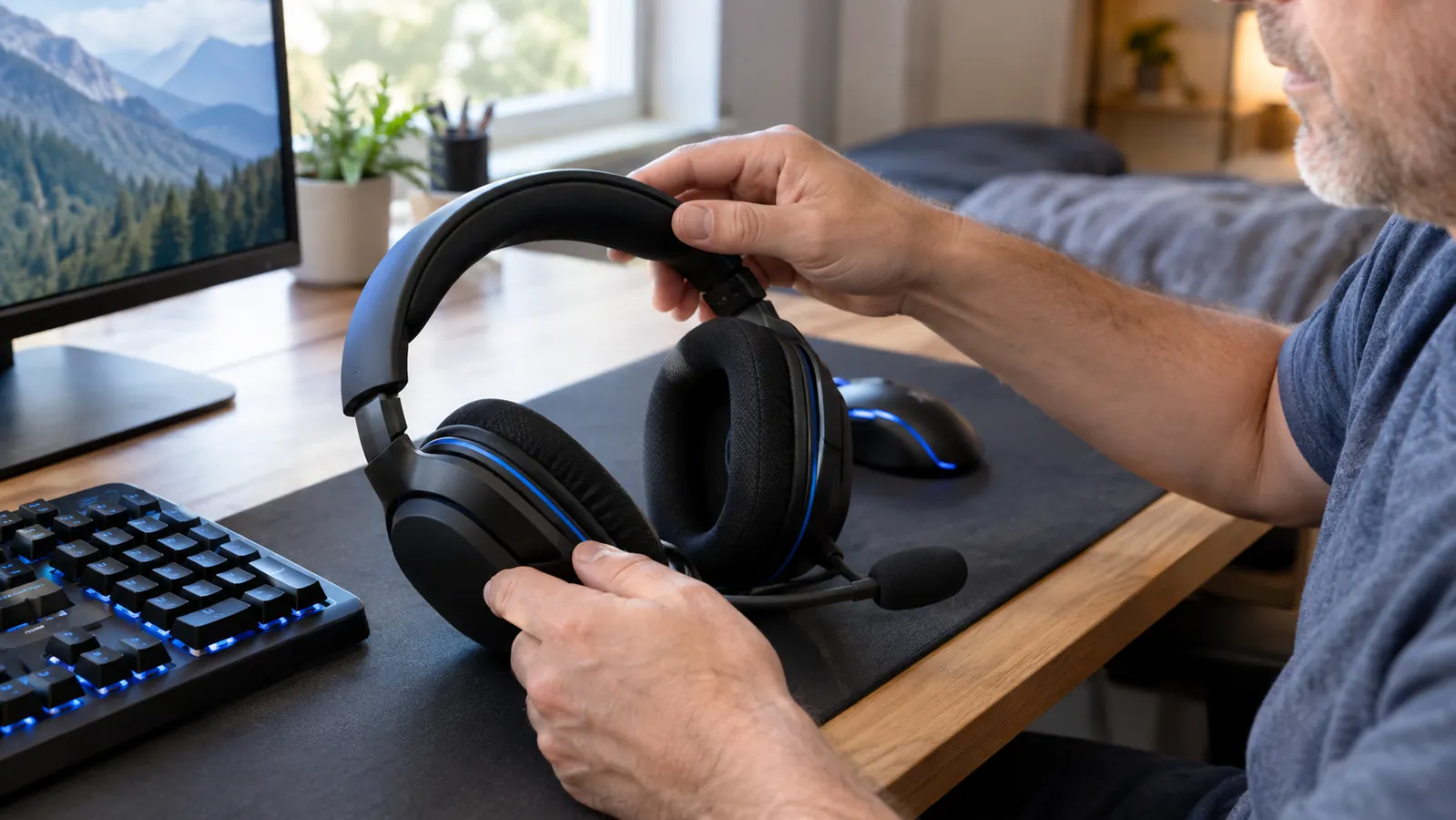
Every wireless headset I've tried has eventually dropped its connection at the worst possible moment. Sometimes it's interference from the router, sometimes a USB 3.0 port, sometimes just a flaky driver. A USB port, a microwave, even the router in the next room, all of them can trip a wireless signal at the wrong time. The wire has no such weakness. The fix is always the same: unplug the dongle, plug it back in, apologize to your team. A wired headset cannot drop its connection, because the connection is a wire. End of story.
Audio arrives when it's supposed to
Wireless adds latency. It's small, and modern wireless is better than it used to be, but better is not instant. In a shooter, hearing a footstep a fraction of a second late can be the difference between winning a fight and watching the killcam. Wired audio arrives the moment the game produces it. With the HyperX Cloud II's 7.1 virtual surround sound, I can place footsteps and callouts without thinking about it. The virtual surround does not just widen the sound. It tells me where a teammate is without looking at the minimap.
Your money goes into sound, not radios
A wireless headset has to pay for a battery, an antenna, a dongle, and a charging circuit before it spends a cent on sound. A wired headset spends that budget on the parts that actually make noise. That's why the HyperX Cloud II keeps sounding better to me than wireless sets that cost more. Bigger drivers, memory foam ear pads, and a closed-back design do more for detail and comfort than any radio link I've tried. That is the trade I keep making: no radio parts, more sound parts.
No charging routine to forget
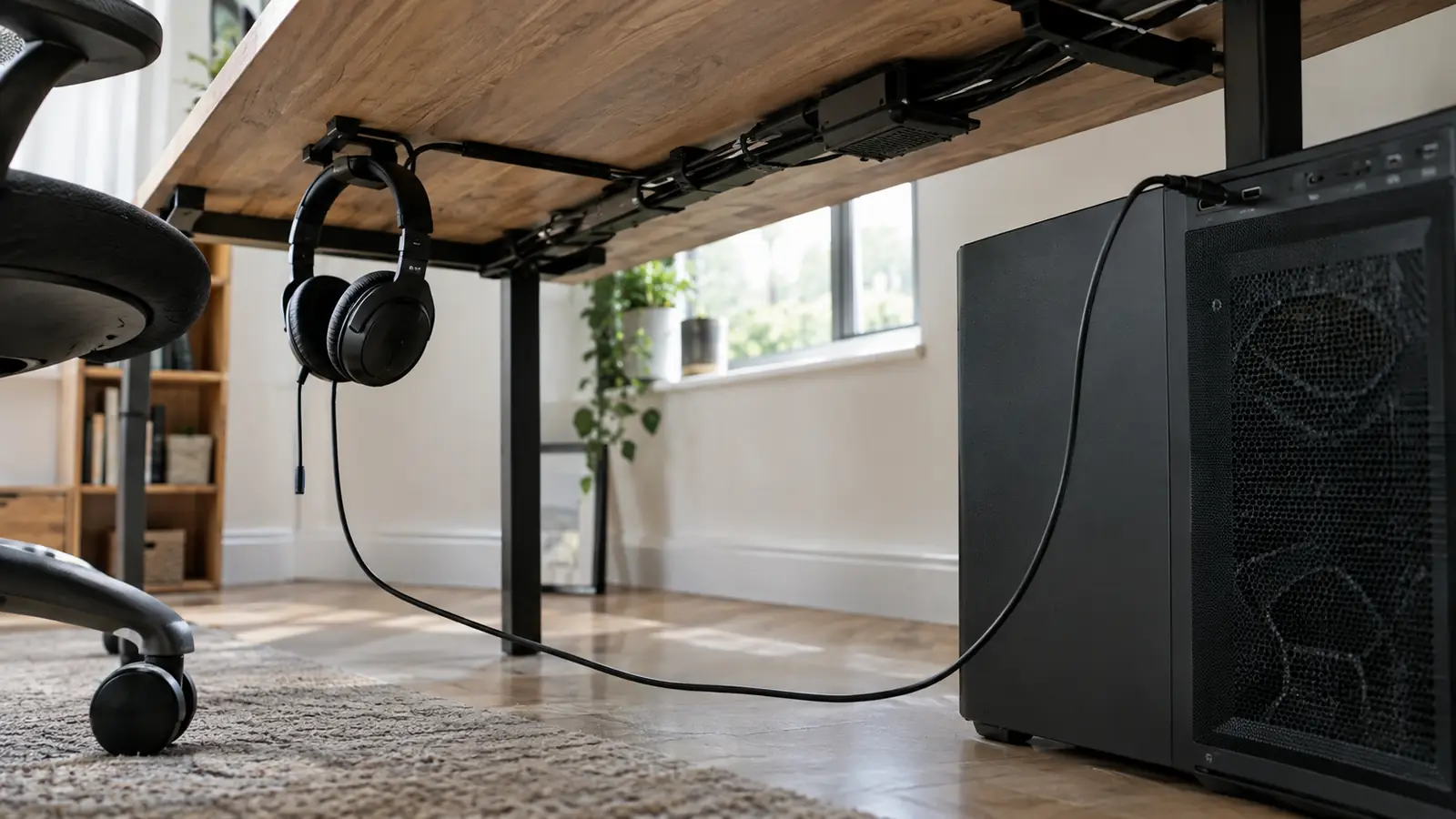
Wireless headsets come with homework. Charge them overnight, remember to top them up before a long session, pack a cable for the trip. I have enough homework. The HyperX Cloud II simply sits on its hook until I need it, and it is always at full strength, because full strength for a wired headset is just plugged in. For a desk setup two feet from the PC tower, that convenience beats wireless convenience every time. I already charge a phone, a mouse, and a controller. The headset is the one thing I never think about.
Full-quality audio, no compression
Wireless headsets compress the audio signal to fit through a radio link, especially over Bluetooth. You lose the low end and the fine detail, and you don't notice until you hear the same game through a wired headset. The HyperX Cloud II gets the full, uncompressed signal from the PC. Explosions have weight. Rain has texture. It's the kind of difference you feel before you can name it. Listen to a song you know on a wireless set, then on a wired set, and you will hear what I mean. It is the difference between hearing a game and feeling it.
Fewer parts to break
Every wireless headset I've owned has aged in a specific way: the battery swells or fades, the dongle gets lost, the charging port gets loose. The HyperX Cloud II's durable aluminum frame and detachable mic are the only parts that matter, and neither depends on a battery that slowly dies. Replacing a battery is a repair I never want to do, and with this headset, I never have to. I've had mine for years, and it still clamps and sounds like the day I unpacked it.
Your teammates hear you clearly
Wireless mics compress your voice, and compression eats consonants. The result is the classic 'you're breaking up' complaint that has nothing to do with your internet. The HyperX Cloud II's detachable mic plugs straight into the same cable as the audio, so Owen hears me clearly on weekend sessions, and I hear him clearly too. No codec, no dropouts, no say that again. Clear voice matters more in a team game than people admit. Good comms win rounds. Bad comms lose them.
Amazon Check the HyperX Cloud II's current price on Amazon →
Plug it into anything, no pairing menu
The HyperX Cloud II works with PC, PS4, PS4 Pro, Xbox One, and Xbox One S right out of the box. No Bluetooth pairing, no dongle to swap between devices, no forgetting which device it's connected to. If I move it from the PC to a console, I just unplug and plug in. That's the whole setup. That simplicity is the whole point of a desktop headset. I'll take a two-second plug over a pairing ritual any day.
One cable is easier to manage than you think
The biggest objection to wired is the cable, and I get it. But on a desk, one cable is nothing. I routed mine along the back edge of my corner desk, out of the way of my mouse, and I genuinely forget it's there. Meanwhile, my wireless friends are tracking dongles, charging cables, and battery levels. I have one cable doing the job, and it never needs a firmware update. Two feet of cable is a small thing to trade for a connection that never argues with you. For a desk setup, that is the whole argument.
What I'd Skip
If you play from a couch, with the PC or console across the room, a wired headset will drive you up the wall. That's the one setup where wireless genuinely wins, and I'd skip the HyperX Cloud II there. I'd also skip it if you need a truly open soundstage for tournament-level play; this is a closed-back headset built for immersion and comfort. But if you sit at a desk, the way most PC gamers do, the cable is a non-issue and every tradeoff runs in wired's favor. If you already love a wireless headset, this list is not an argument against your experience.
The HyperX Cloud II has never once dropped its connection in the middle of a round. I cannot say that about any wireless headset I have owned.
The one cable I'll never cut
If you're done charging headsets and apologizing for dropouts, the HyperX Cloud II is the wired pick I keep coming back to. It holds a 4.5-star average across more than 69,000 ratings, and the current price on Amazon makes the switch an easy one.
Amazon Check Today's Price on Amazon →